

Carbon Capture Utilization and Storage Opportunities in Alberta
A global leader in carbon capture, utilization and storage (CCUS)
Alberta’s carbon storage resources are vast, with over 100 billion tonnes estimated capacity in deep saline aquifers and oil and gas reservoirs. The province’s unique geology is a key reason for this capacity and a critical reason why investors are keen to expand CCUS operations here.
The International Energy Agency (IEA) estimates that geological storage or sequestration, CCUS, will be responsible for 90% of captured CO₂. A new wave of CCS projects have been proposed in the province with a potential to increase the capacity to 56 million tonnes of CO₂ emissions in Alberta by 2030.
Of note, the proposed Pathways Alliance project plans to connect more than 20 oilsands facilities in northern Alberta to an underground CO₂ storage hub and in September 2025 was identified as a strategic area of focus for the federal Major Projects Office.
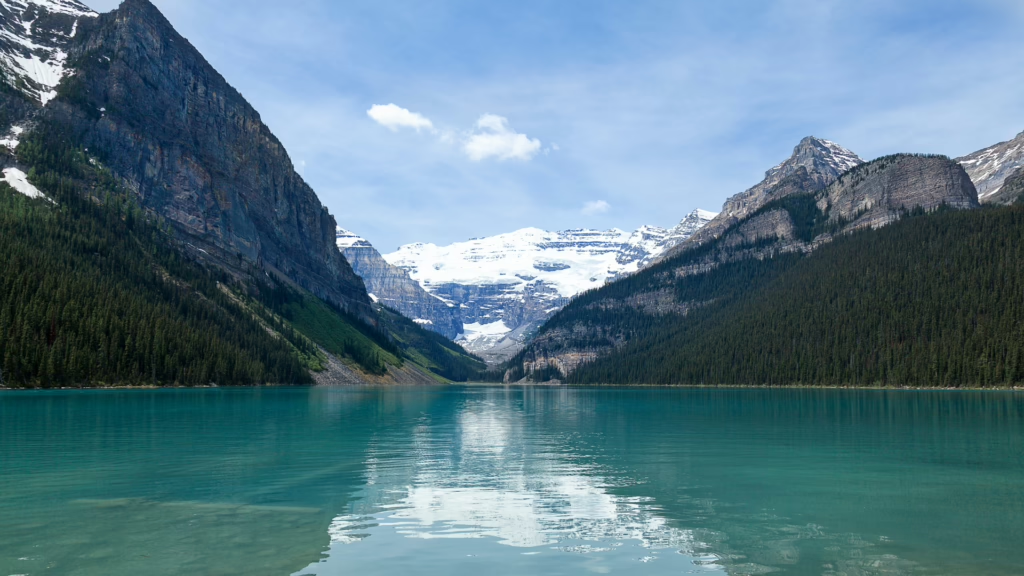
Oldman Dam Provincial Recreation Area near Pincher Creek, AB
Photo Credit: © Travel Alberta by Neil Zeller
A leader in Carbon capture, Utilization, & storage
Alberta’s carbon storage resources are vast, with over 100 billion tonnes estimated capacity in deep saline aquifers and oil and gas reservoirs. The province’s unique geology is a key reason for this capacity and a critical reason why investors are keen to expand CCUS operations here.
Two commercial-scale projects are reducing greenhouse gas (GHG) emissions by up to 2.76 million tonnes annually:
- Quest Project
- Alberta Carbon Trunk Line Project
Quest began commercial operations in 2015 and has captured and stored over 10 million tonnes of carbon, while the Alberta Carbon Trunk Line project captured and sequestered over 7 million tonnes of carbon since commercial operations began in 2020.
In 2022, the Government of Alberta selected 25 new CCS projects for further evaluation. Seven of which, combined with existing project expansions, have the potential to increase Alberta’s CCS capacity to between 50-60 million tonnes (Mt) of CO₂ annually.
Carbon Sequestration and storage
Alberta is home to the Alberta Carbon Trunk Line (ACTL), the world’s largest carbon capture and storage (CSS) project. This 240 km pipeline currently helps gather, compress, and store 1.6 million tonnes of CO₂ per year. The ultimate capacity of the system is 14.6 million tonnes for CO₂ per year.
Additionally, Quest Project, Shell’s Scotford Upgrader, is another major CCUS project that has been operational since 2015 and captures nearly 1.08 million tonnes of CO₂ annually.
direct air Capture (DAC)
Direct air capture (DAC) in Alberta is a part of the province’s efforts to reduce carbon emissions and advance towards a cleaner energy future. Alberta has invested heavily in carbon capture, utilization, and storage (CCUS) projects, leveraging its unique geological formations and regulatory framework to become a leader in this field.
One notable example is the initiative by Deep Sky, their project is the world’s first Carbon Removal Innovation & Commercialization Centre, Deep Sky Alpha, in Innisfail, Alberta. This center, which recently went live and operational, aims to develop and commercialize technologies for removing carbon dioxide directly from the atmosphere, contributing to Alberta’s broader CCUS strategy.
Alberta has invested over $1.8 Billion to support CCUS-related projects and programs
reducing emissions through innovation
Opportunities in CCUS in the province goes beyond the oil and gas sector. Continuing to develop this technology will help Alberta capitalize on emerging opportunities, such as clean hydrogen development, and reduce emissions in industries across the energy sector and other industries, including concrete and fertilizer.
Varme Energy
Varme’s flagship facility in Alberta’s Industrial Heartland will take solid waste from landfills and be converted into electricity, while utilizing carbon capture to inject into one of Alberta’s carbon sequestration hubs.

Air Products
Investing $1.3 billion to build the world’s largest net-zero hydrogen network. Their facility will use an advanced process technology that will enable cost-effective capture of more than 90% of the carbon emissions.
Business Friendly
Stable regulatory environment and business-friendly policies make Alberta the perfect place to invest
1st in Canada
Alberta was the first jurisdiction in Canada with an established regulatory and rick management framework for large-scale CCUS projects.
Low Corporate Tax Burden
Alberta’s combined corporate tax rate is 23% — the lowest in the country and lower than 44 US states.
Alberta Energy Regulator
The Alberta Energy Regulator (AER) provides one of the most advanced regulatory systems in the world ensuring an efficient, safe and environmentally responsible development of energy resources throughout the entire life cycle.
Talent
Alberta’s innovative talent is driving the future of Carbon Capture, Utilization, and Storage (CCUS) with unmatched expertise
Concentration of Engineers
Alberta has the most professional engineers per capita in North America.
Young and Educated
In 2024, the combined share of workers with a post-secondary certificate and university was 73.8%.
Skilled Trades Programs
Numerous polytechnics and universities offer courses and programs specialized in CCUS.
Infrastructure
Alberta’s energy sector is supported by a vast network of pipelines and a market-based electricity grid
Storage Hubs
The province has 22 proposed CCS storage hubs across the province.
Alberta Carbon Trunk Line (ACTL)
A 240 km pipeline that currently helps gather, compress, and store 1.6 million tonnes of CO₂ per year. The ultimate capacity of the system is 14.6 million tonnes for CO₂ per year.
Expansive Pipeline Network
Alberta’s oil and gas pipelines stretch more than 440,000 kilometres which is equivalent to crossing Canada 59 times.
Book A Meeting
Learn how our team can help you maximize on the speed, ease and costs of expanding or relocating your business to Alberta.
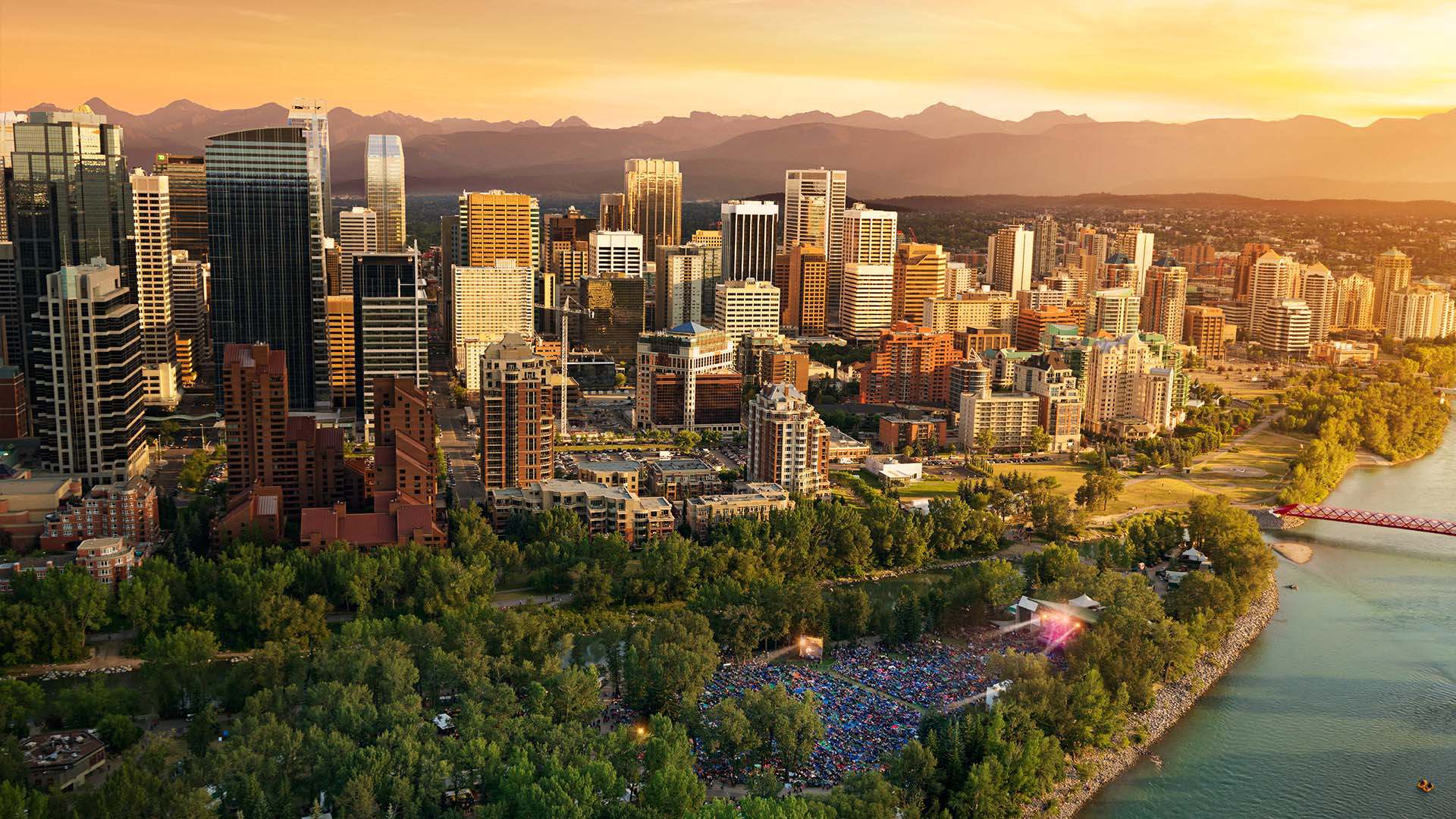
Downtown Calgary
There are over 200 art galleries, parks, public art, historical buildings, and shopping malls in the downtown core.